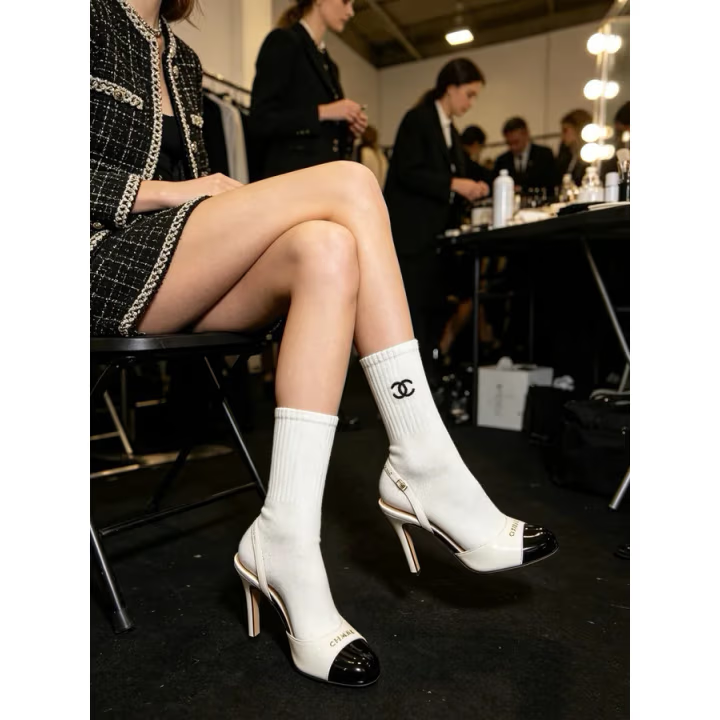
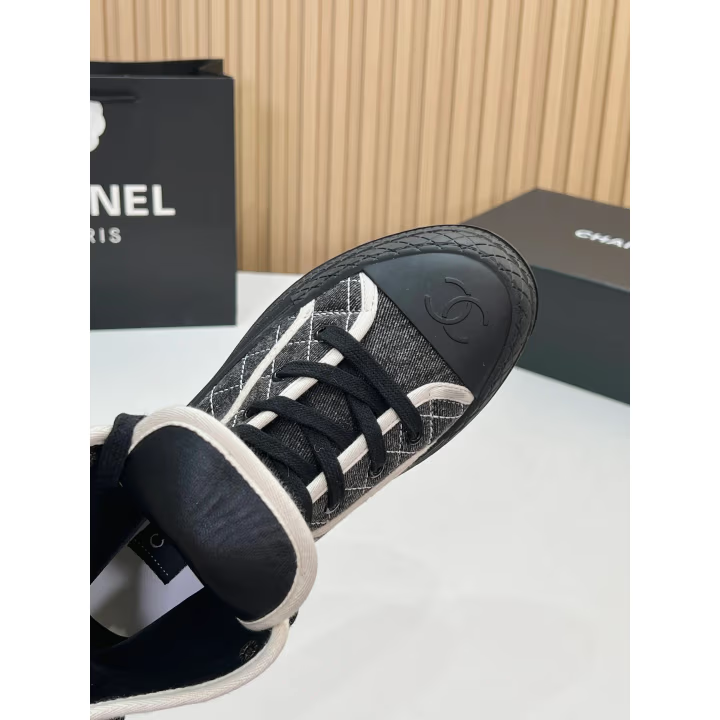
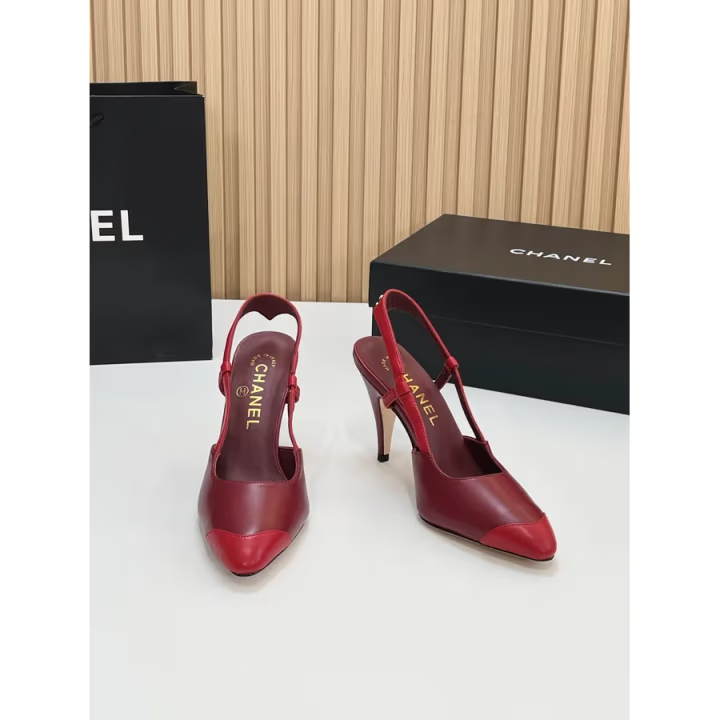
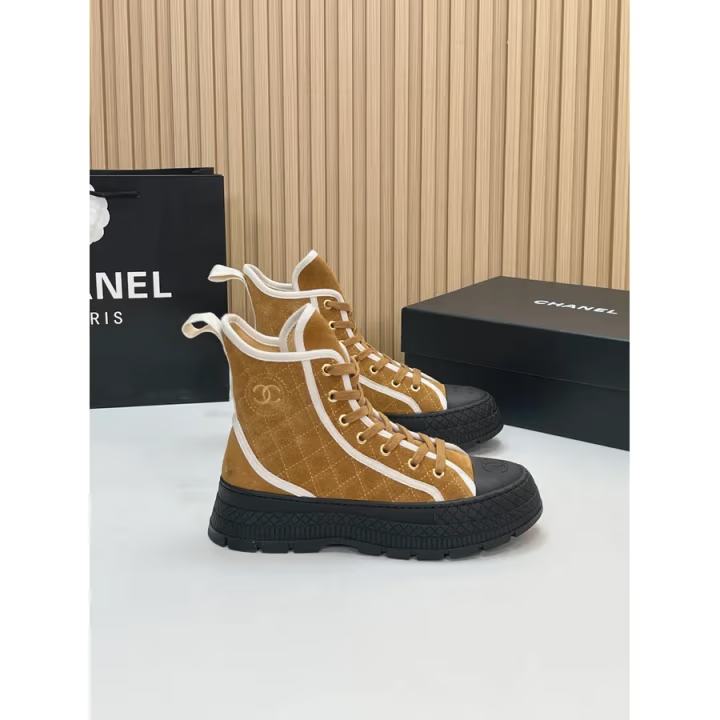

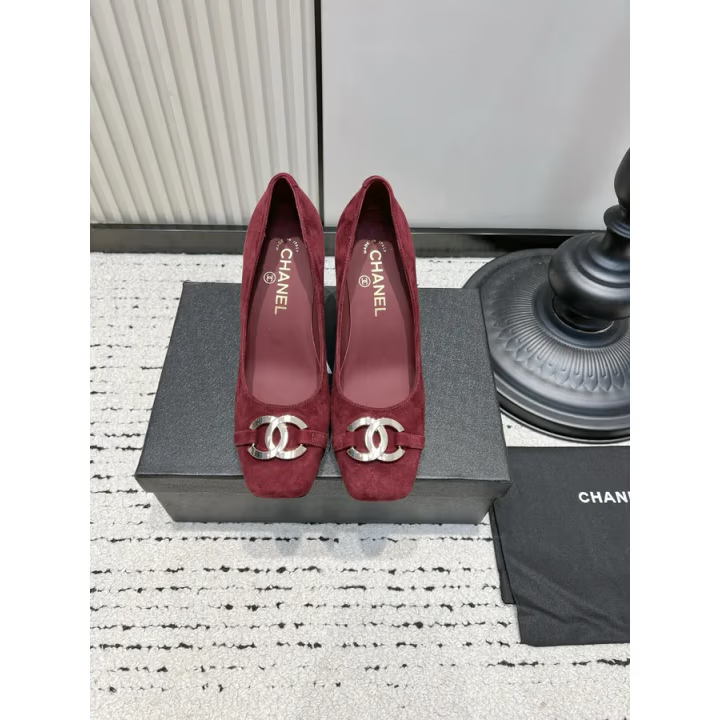
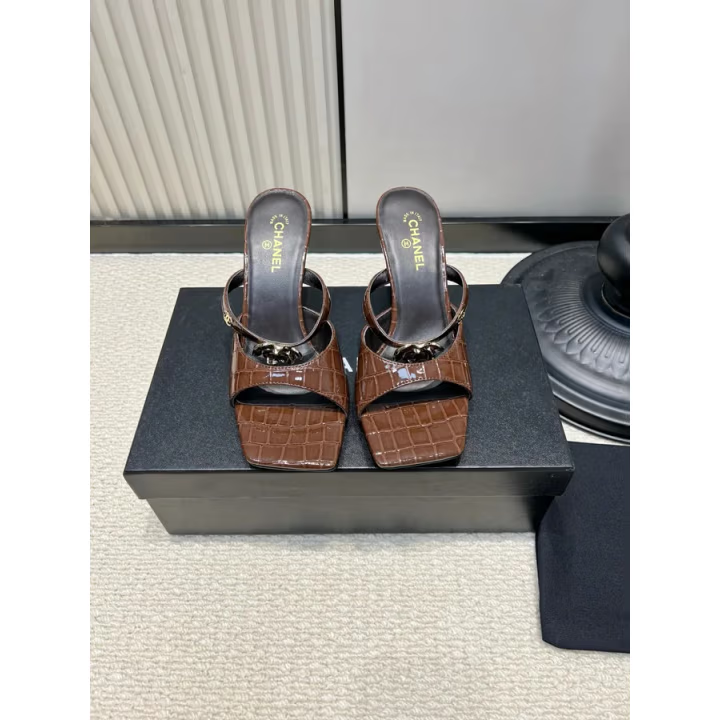


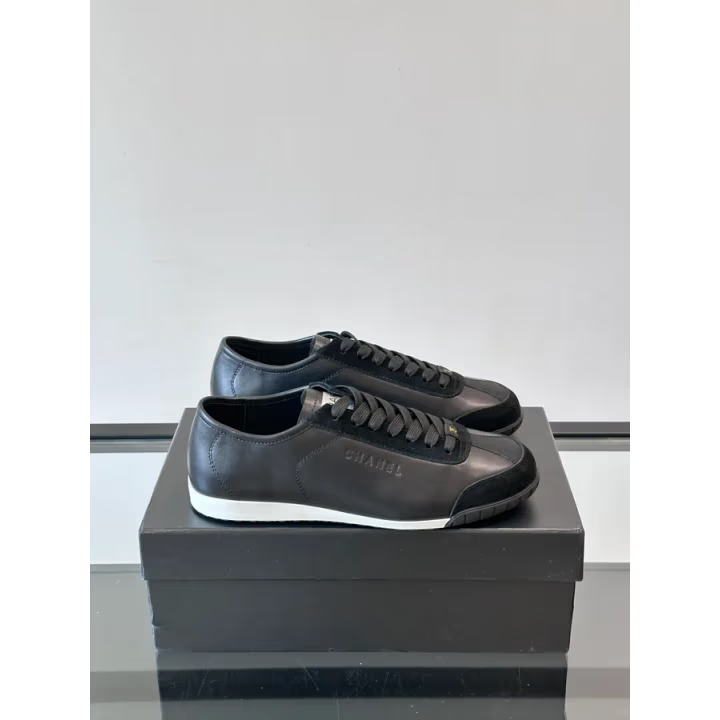
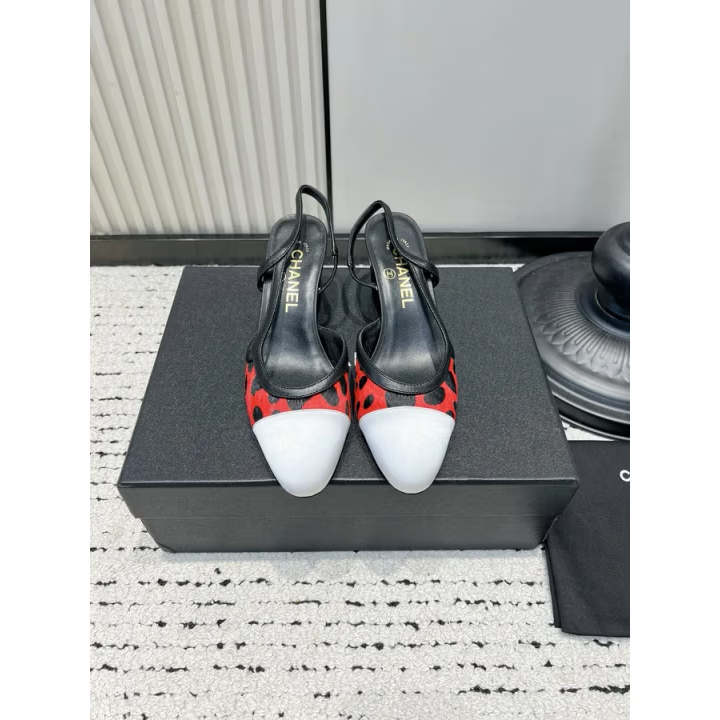
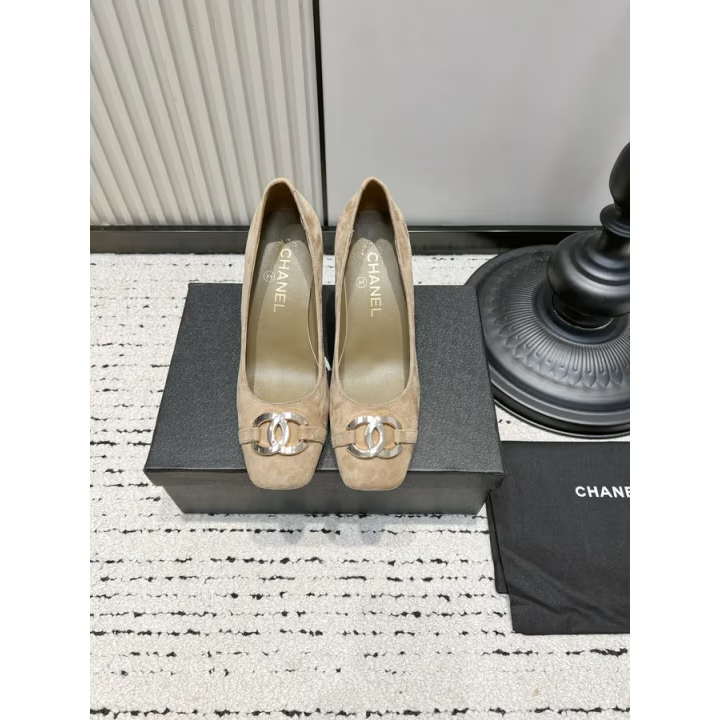

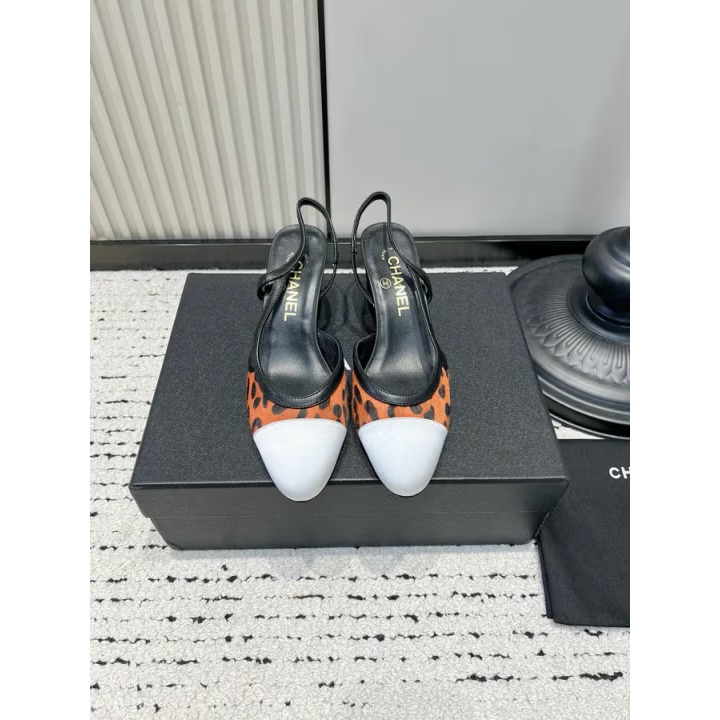

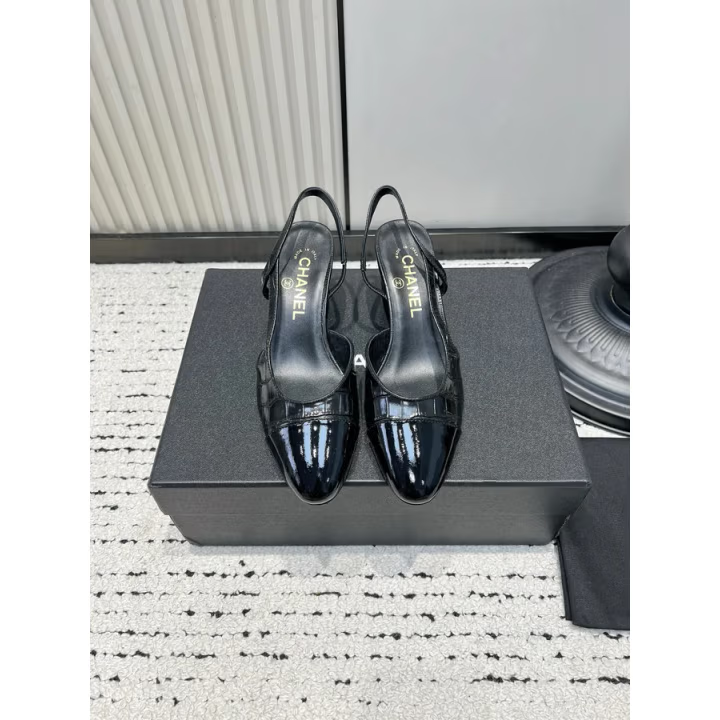

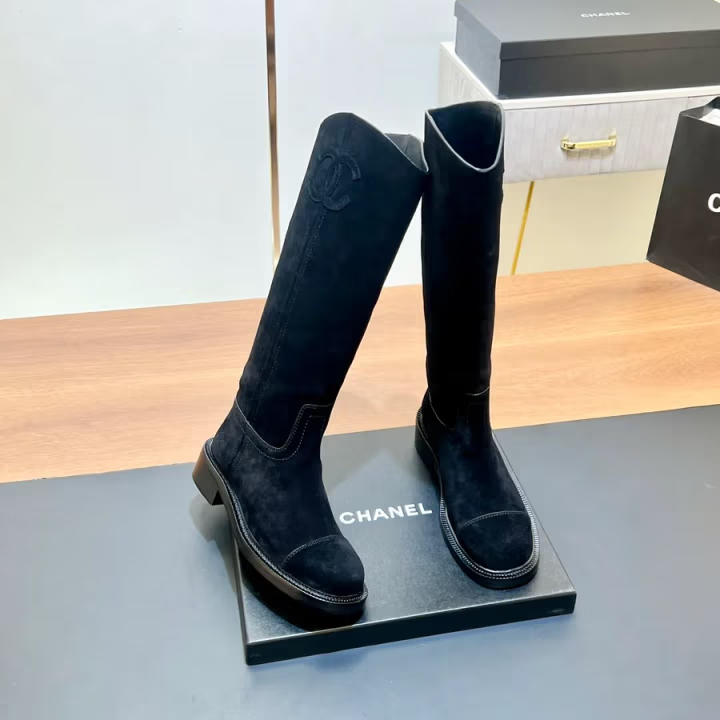


The women's ladder runs from EU 35 to 41 in the published charts
Chanel's women's shoe charts commonly place EU 35 with US 5 and EU 41 with US 11, yet a second published column sets the middle of the range half a size lower, so EU 39 reads as US 9 on one chart and US 8 to 8.5 on another. The EU number printed inside the shoe is therefore the stable identifier, and the foot-length column is a second check rather than a conversion: one chart prints 22.0 cm of foot for EU 36 and 24.3 cm for EU 39.5. Boot listings show why that check matters. A marked EU 36 boot published with a 22 cm insole leaves no allowance over the chart, while a marked 39.5 with a 26 cm insole leaves about 1.7 cm. Ask a seller for the size stamp, the scale printed on the box and the longer foot measured in centimetres before trusting any US figure.
Sneaker height is a property of the build
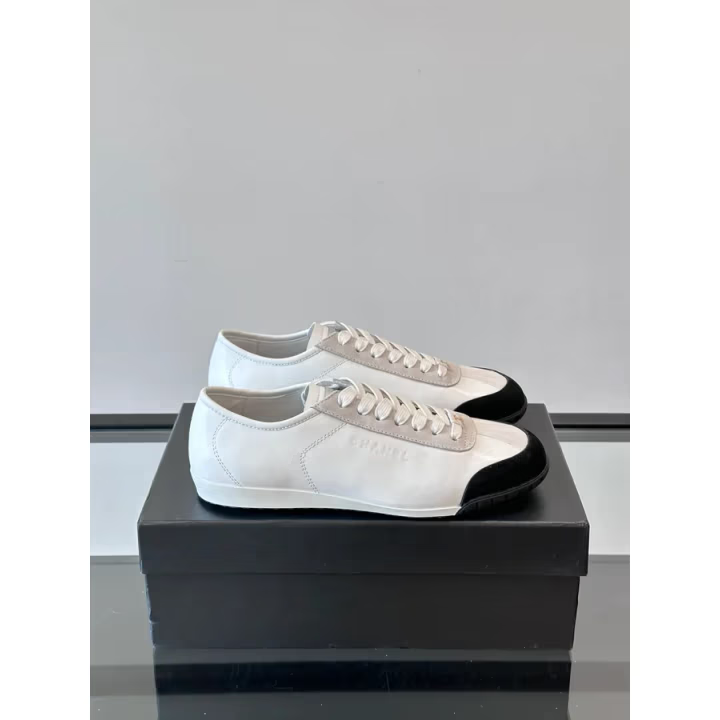
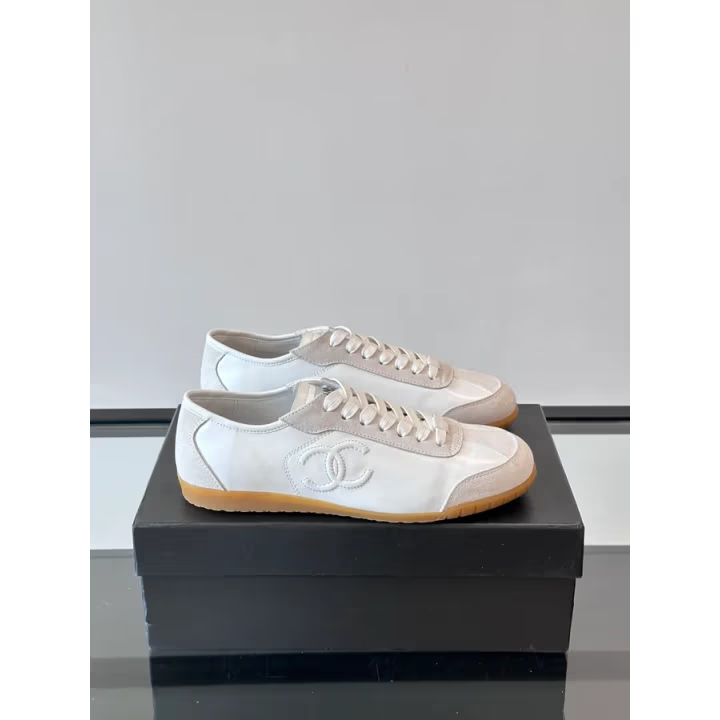
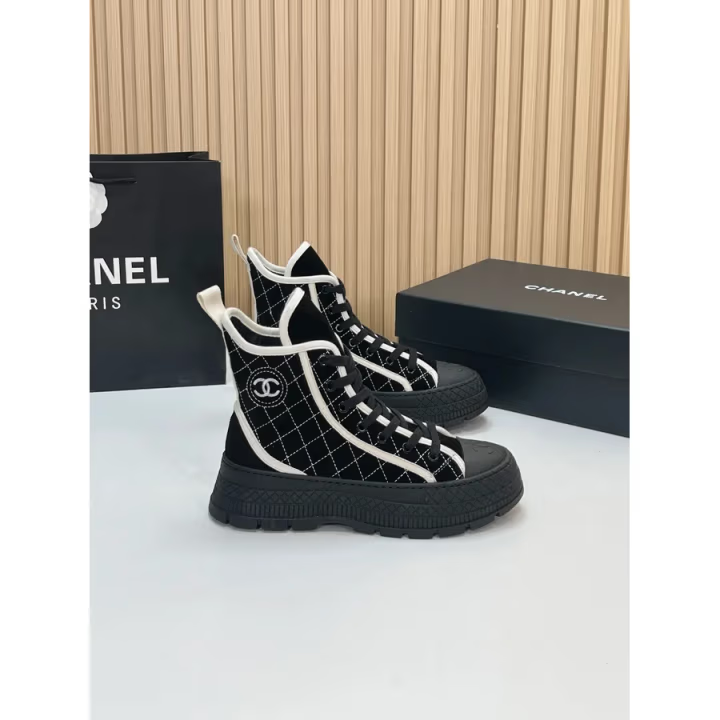
Published Chanel sneaker builds have listed 4 cm platforms, 2 cm retro soles and a measured 1.9 cm platform on a resale pair. Those are different shoes even when a message calls each one a Chanel sneaker. A taller platform changes ankle position and can make a slightly longer shoe feel more stable. Ask for the sole depth at the heel and forefoot, and if possible the internal footbed length. The outer sole is not the usable length: it extends beyond the toes and heel. A photo taken from a low side angle shows which build you are looking at.
The width letter is not visible on most charts
Chanel women's shoes can come in more than one width, and a size chart usually prints length only. Boutique-level accounts describe a regular or B-width and a C-width for wider feet. When a listing shows a 39 but the shoe feels unusually loose, the missing letter can be the explanation. Ask for a close photograph of the inner stamp and any width marking. A C-width cannot be inferred from the number of the size or from a front view. For a wide forefoot, confirming the letter is more useful than moving down half a size and creating a length problem.
Slingbacks, slides and boots are held differently
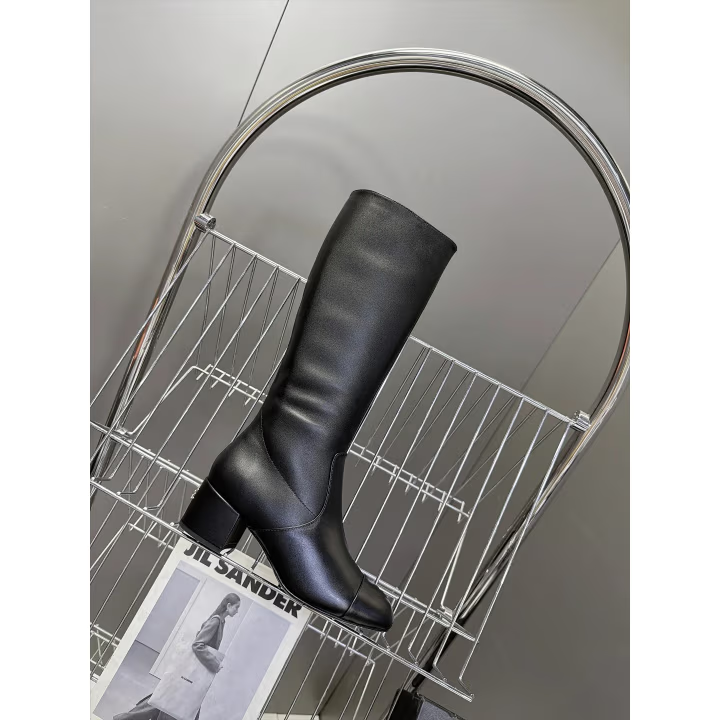
A slingback strap must sit close to the heel, a slide relies on the vamp, and a boot adds a shaft that the EU number never describes. Published Chanel boot listings show the spread: heels of 2, 4, 7 to 8, 8.5 to 9.5 and 11 cm, shafts from a 6 cm stem on a low boot to 42 cm on knee-high styles, and calf circumferences of 30, 34 and 36 cm within that 42 cm group. Three boots marked 39.5 in the same set stop at a 6 cm stem, a 26 cm height and a 42 cm shaft, so the label alone does not say where the boot ends on the leg. For slingbacks, ask for the strap length and the clear heel gap. For slides, ask for the footbed width. For boots, ask for shaft height, calf circumference and whether the shaft is rigid or zipped.
Material and finish decide how the first fit changes
Smooth calfskin can soften around the flex point, suede follows a similar path but marks more easily, and patent leather offers the least give. Canvas and knit uppers move differently from both and may absorb width without adding length. Quilted leather adds a visible surface and stitching but does not make the internal footbed longer. A pair that is short at the toes should be treated as short regardless of finish; a pair that presses across the instep may change as the upper relaxes. The practical order is length first, width letter second, upper give third.
The four-frame photo set for a Chanel shoe
Send a low side profile for sole depth, a front view for toe shape and width, a rear view for heel counter and strap position, and an interior shot of the size stamp and footbed. Add the model family and whether the shoe is canvas, leather, suede or knit. Those images make it possible to compare the catalogue piece with the table below without assuming that one Chanel sneaker's 39 matches a slingback's 39. That assumption is the most common reason a correct measurement produces the wrong order.