





The format number is a cloth code with a hem tolerance
Hermès lists square formats from scarf 45 at 45 × 45 cm through 55, 70, 80, 90, 100 and the 140 shawl, so each step up the name adds between 10 and 40 cm of side length rather than a fixed increment. The number is a format name rather than a promise of a millimetre-perfect finished cloth. The house's own pages print a 90 as 88.5 × 88.5 cm outside the United States and 34.8 × 34.8 in in the United States, with a note that hand-rolled dimensions can vary. Converted at 2.54 cm to the inch, the American figure is 88.4 cm, so both languages describe the same finished square while each edge sits 1.5 cm below the format name. That margin is the turned and stitched hem. A 3 cm total reduction does not turn a 90 into a 70. Measure a scarf edge to edge with the hem included when comparing a specific piece.
A Carré 90 is the full-artwork size
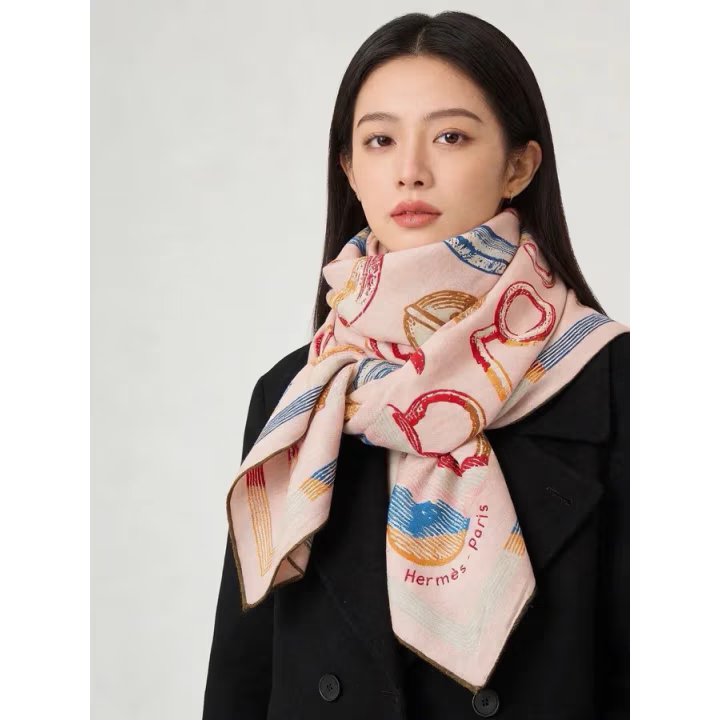
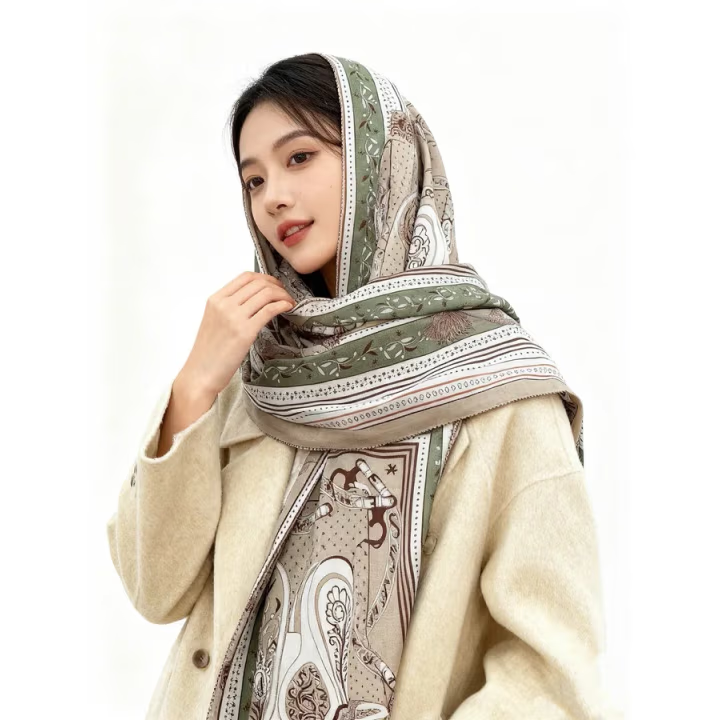
The 90 cm square can be worn as a headscarf, folded into a triangle and knotted, or opened across the shoulders. Its diagonal is long enough to wrap around the neck once with tails to tie. The scale also means the central motif and the border can both be read at once. Smaller formats often show only a crop of a design, while the same artwork may be reprinted in several sizes. If the design title and full composition are important, the 90 is the clearest reference point rather than the smallest square available.
The Twilly is a ribbon with a different arithmetic
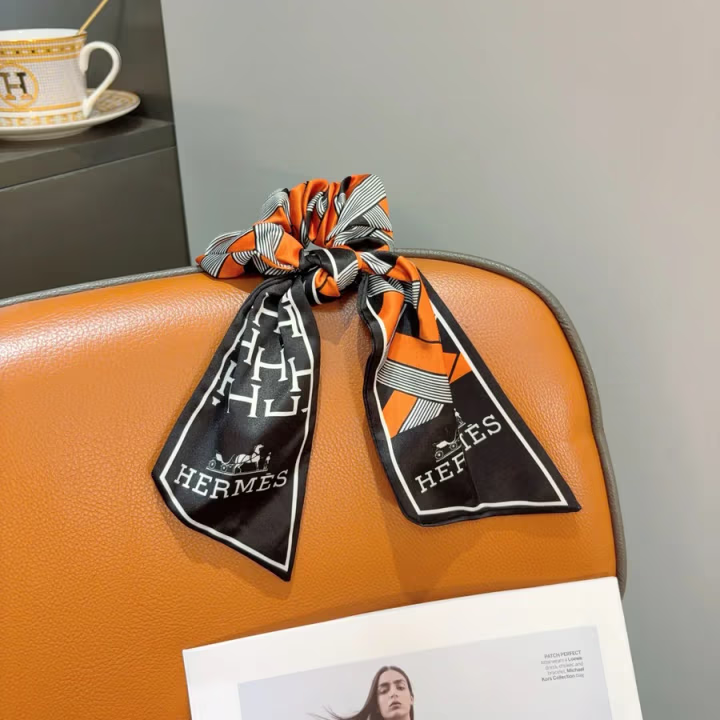
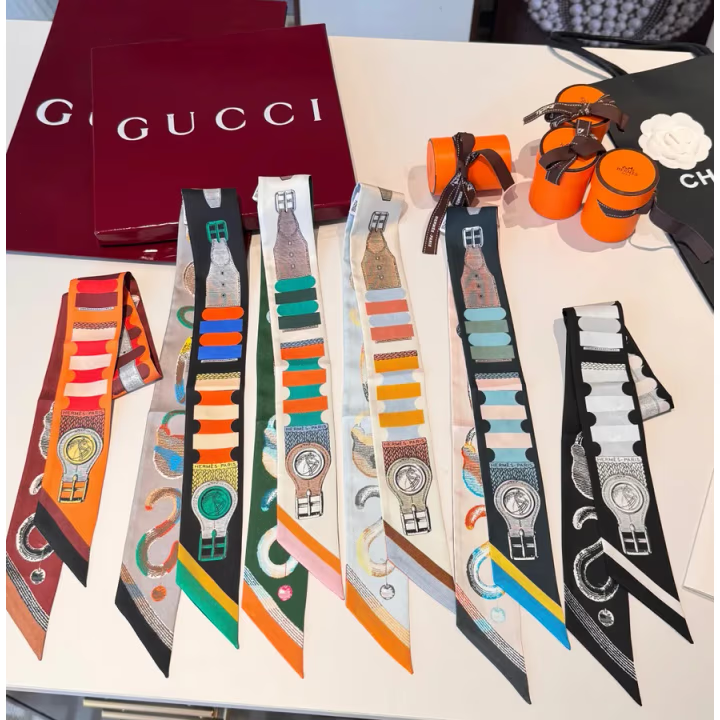
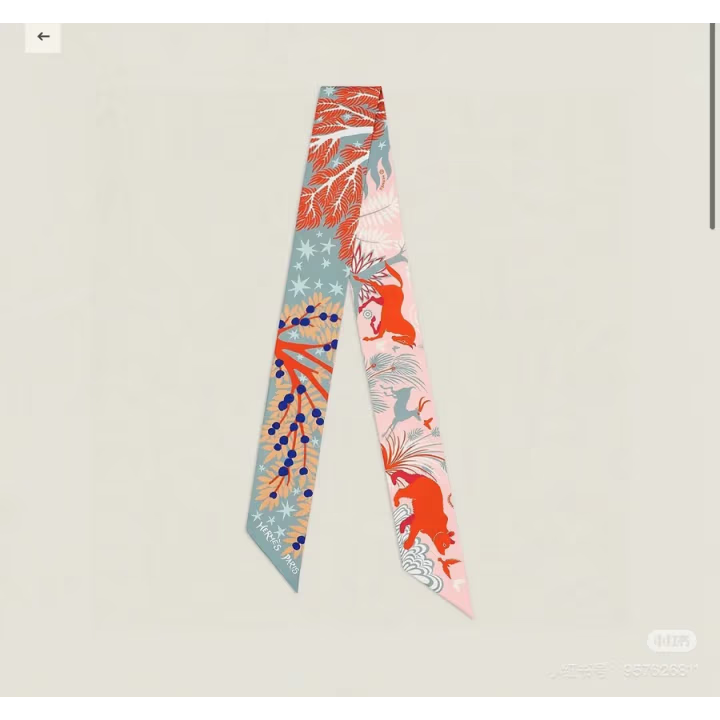
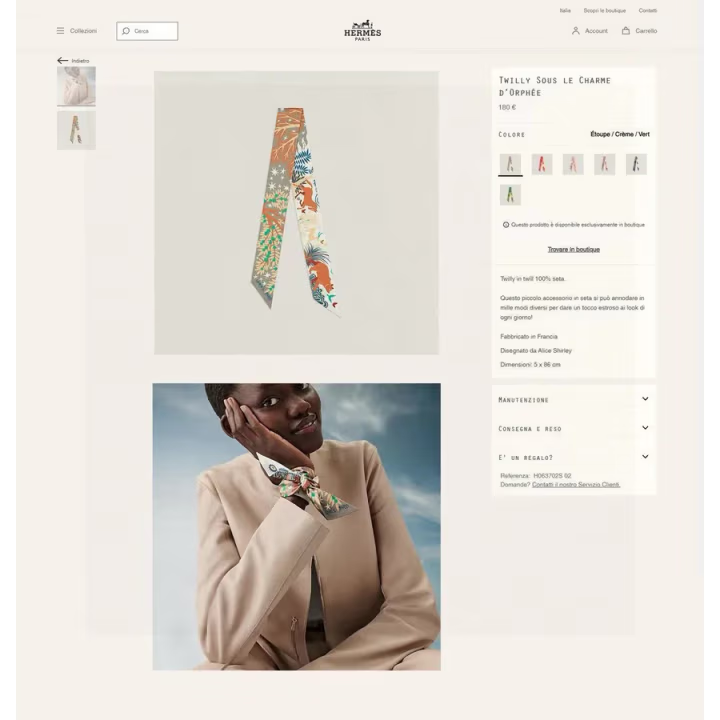
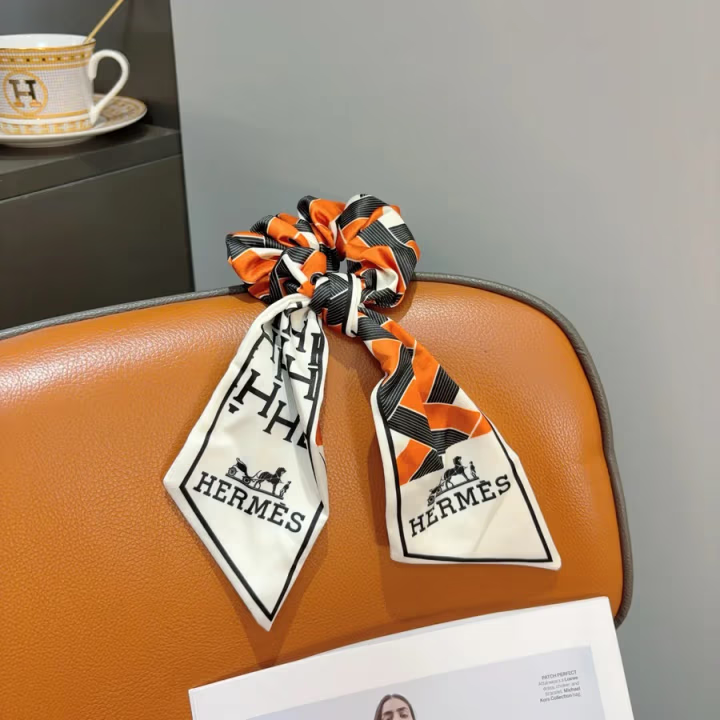
A standard Twilly is 5 × 86.5 cm, and the useful dimension is the length rather than the width. Wraps are paid for in handle circumference: two turns around a 30 cm grip consume about 60 cm and leave roughly 26 cm for the knot and tail, which is why a neatly tied Twilly covers part of a handle rather than the whole grip. A third turn on the same grip would need about 90 cm and overrun the ribbon by 3.5 cm. Three turns only leave a usable tail once the circumference drops to about 26 cm, where 78 cm is used and 8.5 cm remains to finish. The 5 cm width keeps the knot compact enough to sit against the handle base. A Maxi Twilly at about 20 × 220 cm is a different rectangle entirely, so the word Twilly alone does not establish whether the piece is standard, long or an embroidered variant.
The 45, 70 and 140 solve different layering problems
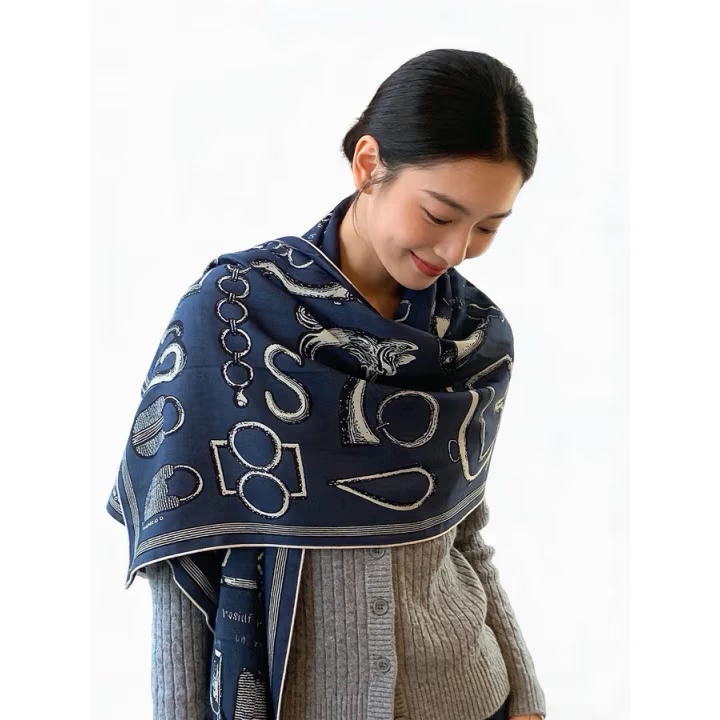
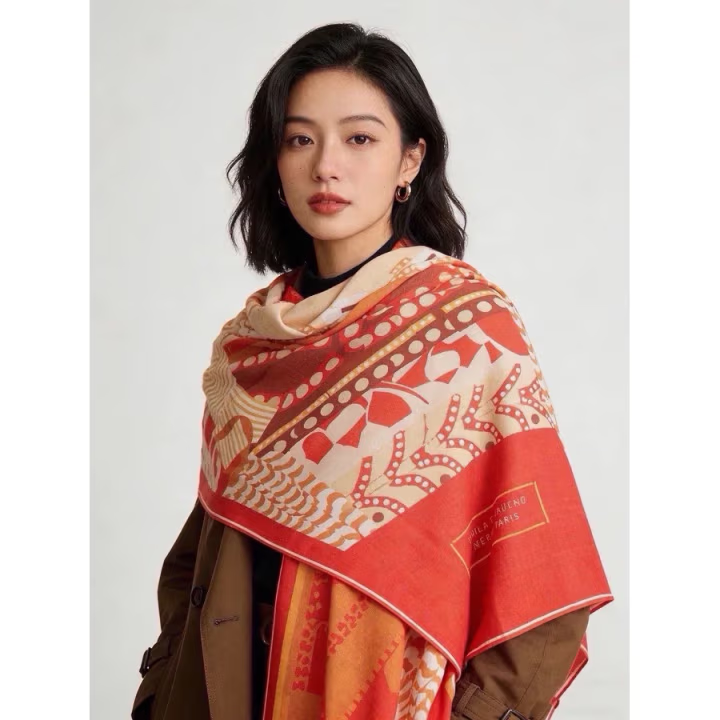
The 45 is a small neck or hair square; folded into a narrow band, its usable length is far shorter than a Twilly. The 70 knots tightly without covering the shoulders. The 140 shawl is large enough to wrap over a coat, and the material is typically cashmere and silk rather than pure silk twill. Those uses follow directly from area and width. A 45 does not become a coat wrap by tying it differently, and a 140 is bulky as a small neck knot. The table should be read together with the intended layer.
Hem, material and print all change the object
A hand-rolled silk twill edge gives a fine raised line and can explain a finished measurement slightly below the format name. A fringed bandana has a different edge and can feel wider when worn. Cashmere and silk at 70% / 30% behaves warmer and more matte than pure silk twill. Two scarves in the same format can therefore feel different around the neck even when their measurements match. Ask for the composition and a close photograph of the hem as well as the design title, especially when buying from a single listing photograph.
The format decision in one paragraph
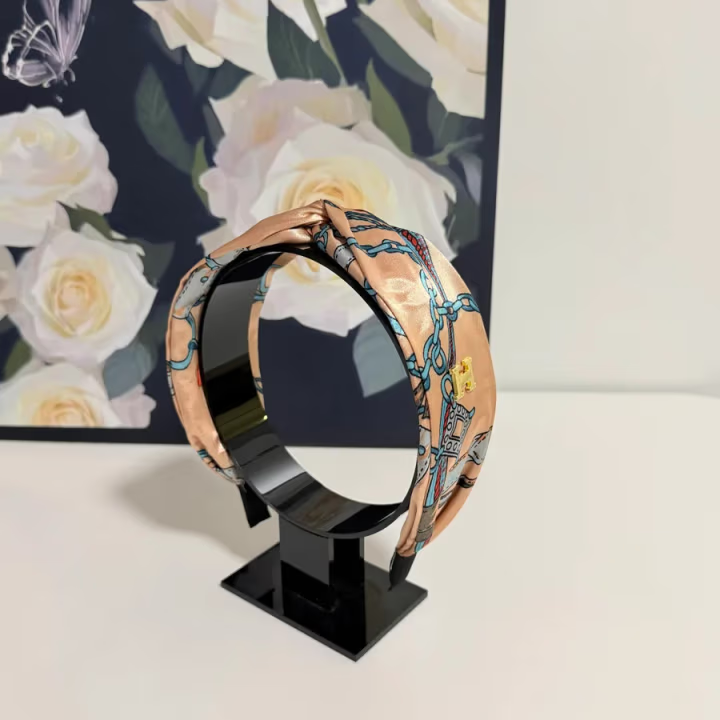
For a bag handle choose the 5 × 86.5 cm Twilly and count the wraps. For a small neck knot choose a 45 or 70. For a full-square composition or a headscarf choose the Carré 90, accepting the small hand-finished tolerance. For a coat layer choose the shawl 140 and confirm its cashmere blend. Hats in the same accessory gallery need a separate inner-circumference measurement; a scarf format cannot establish a hat size. This is the practical meaning of the format ladder.