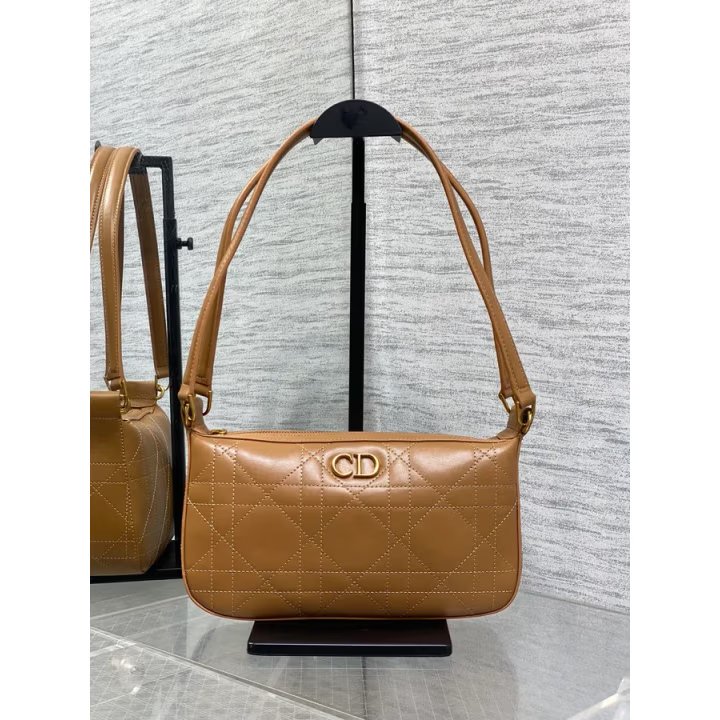
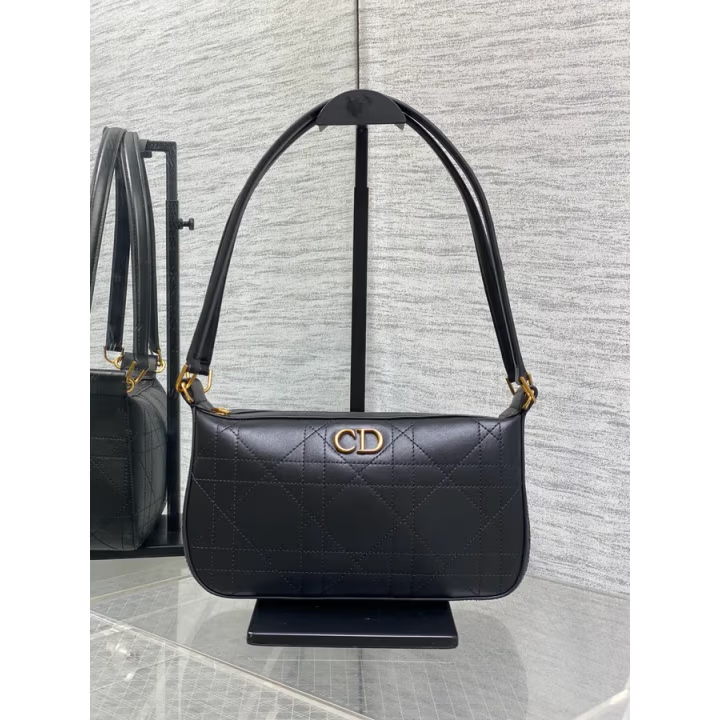
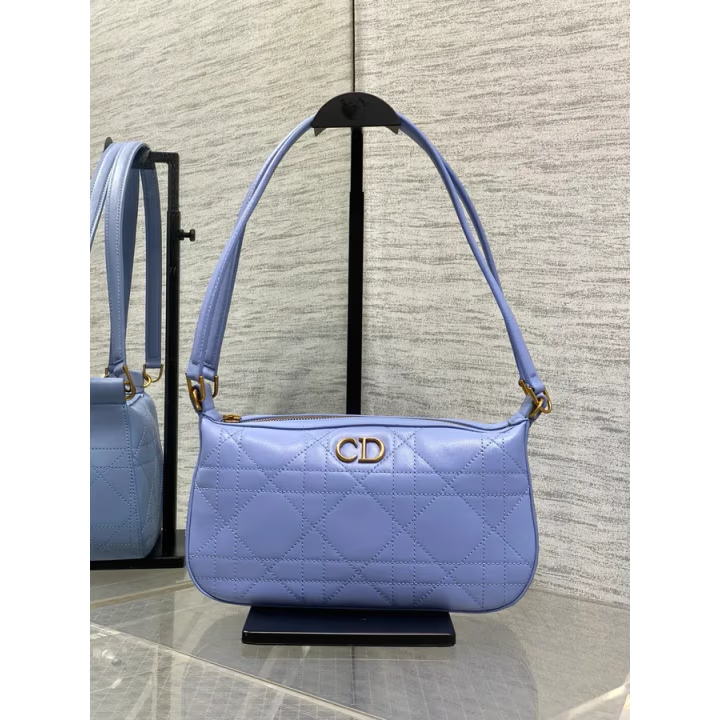
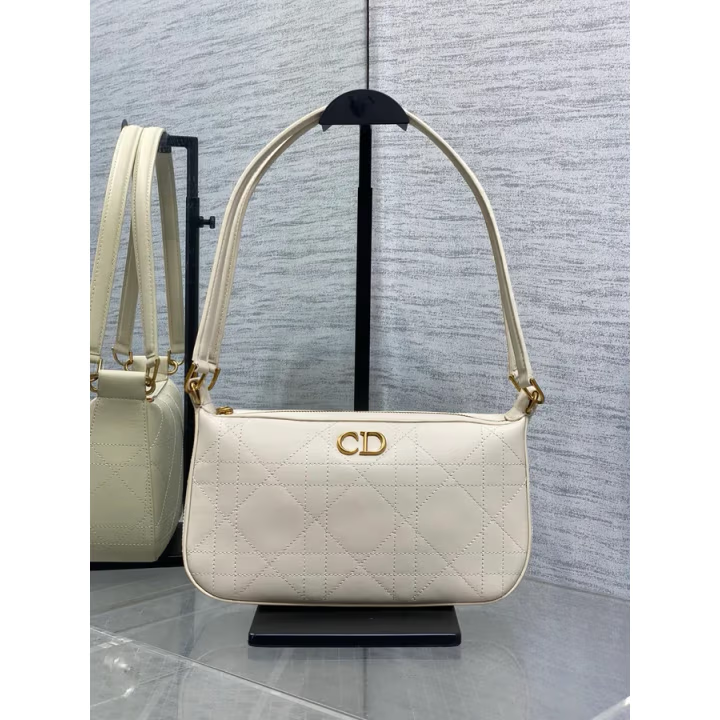
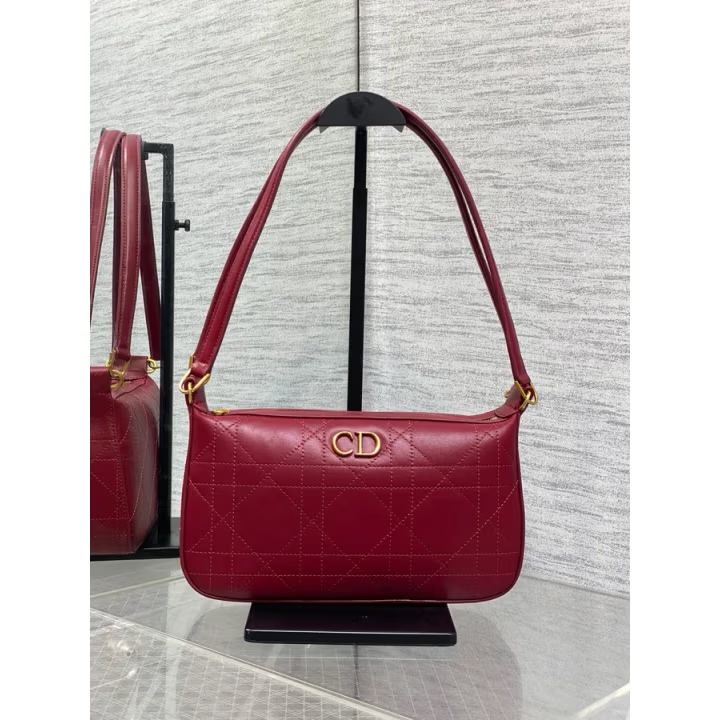
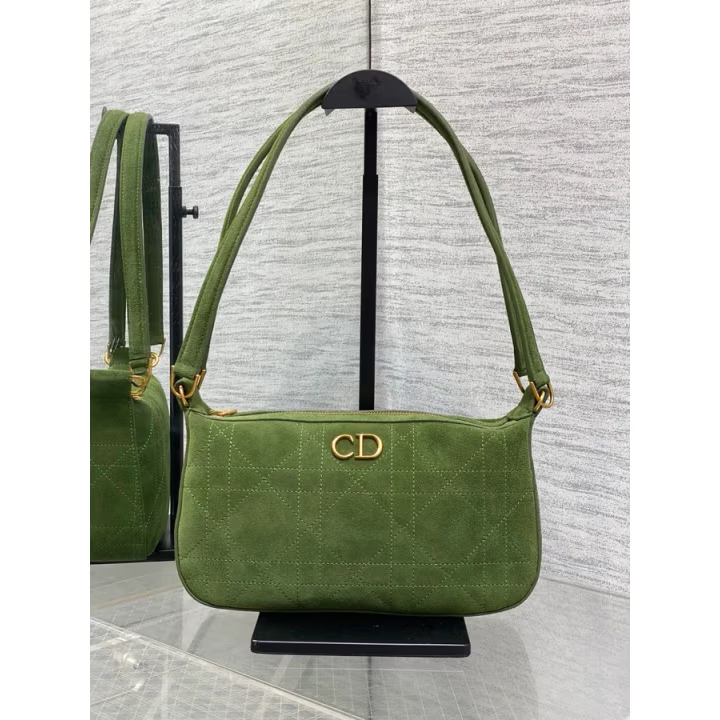
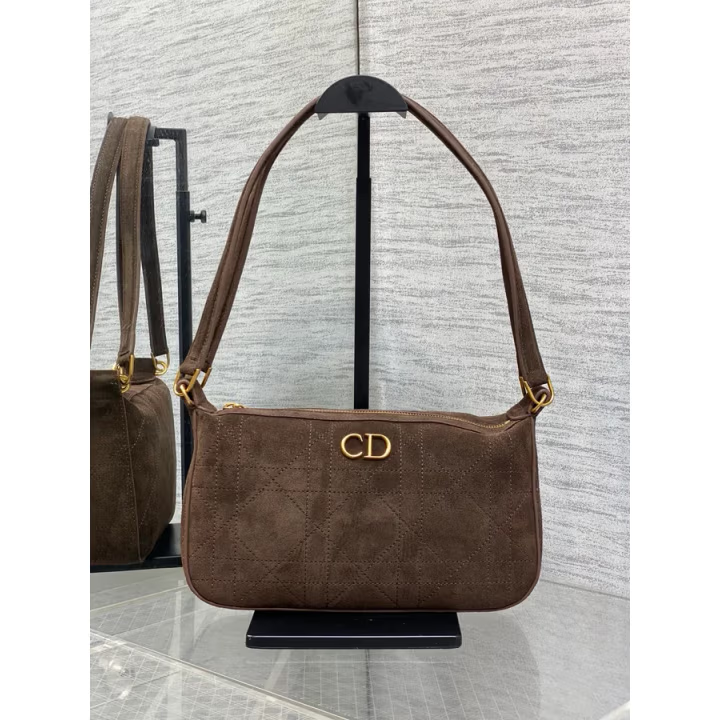
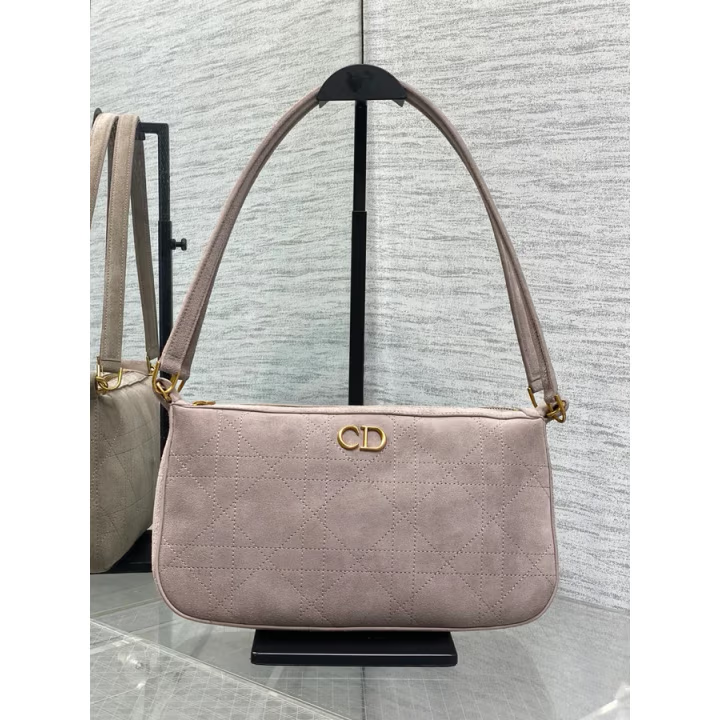
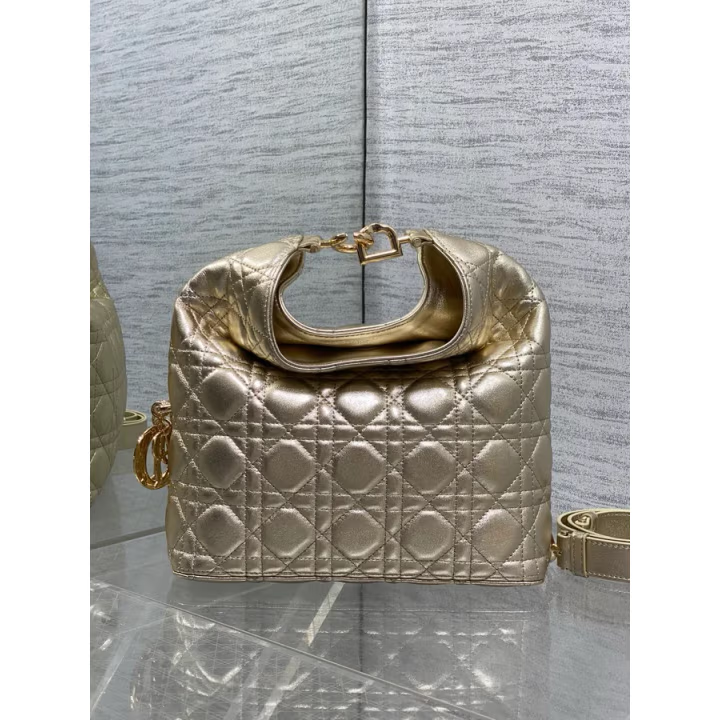
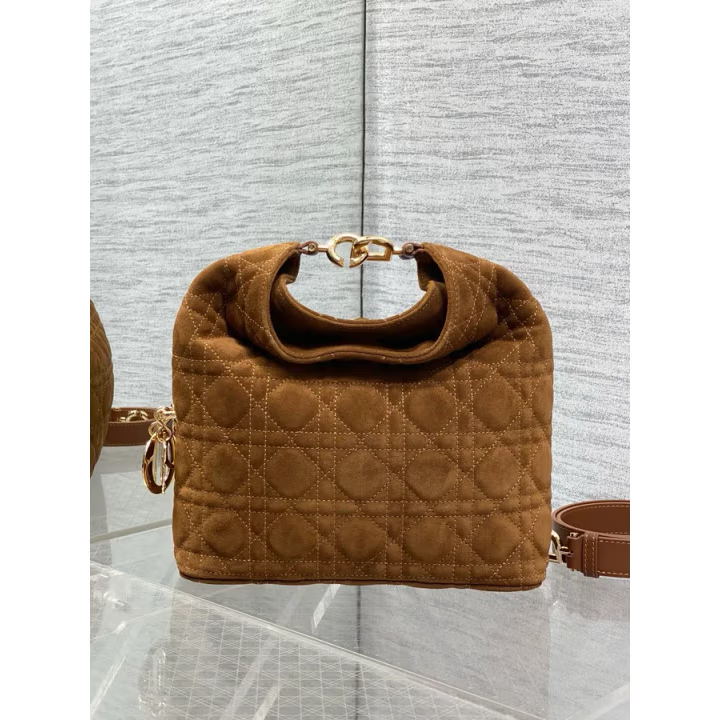
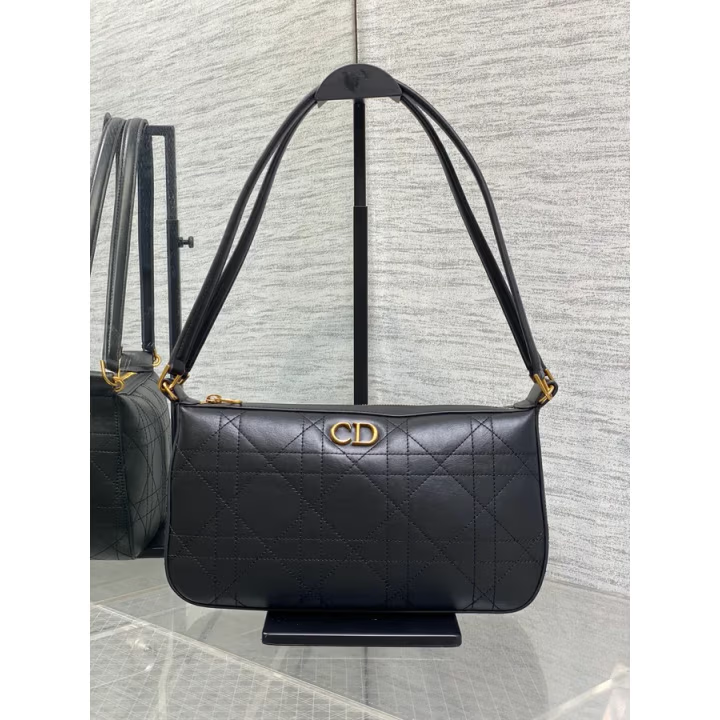
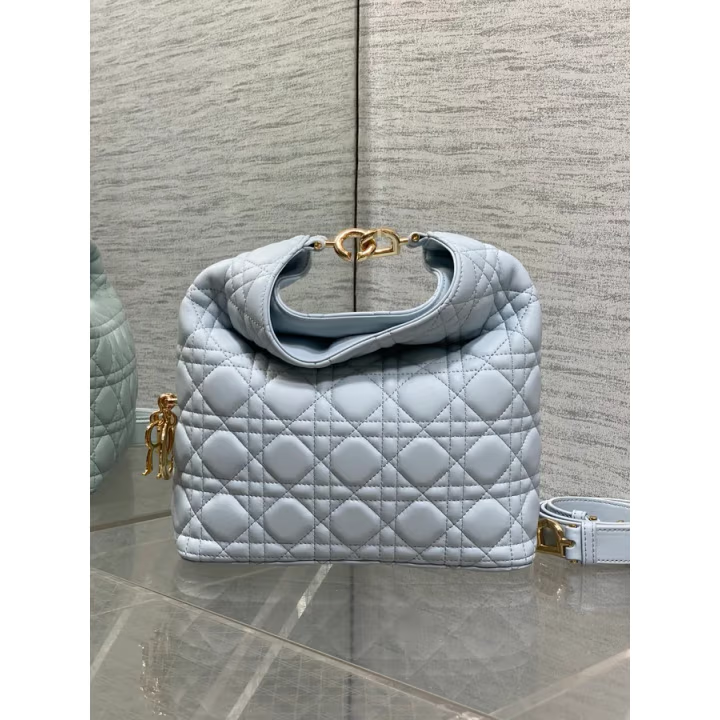
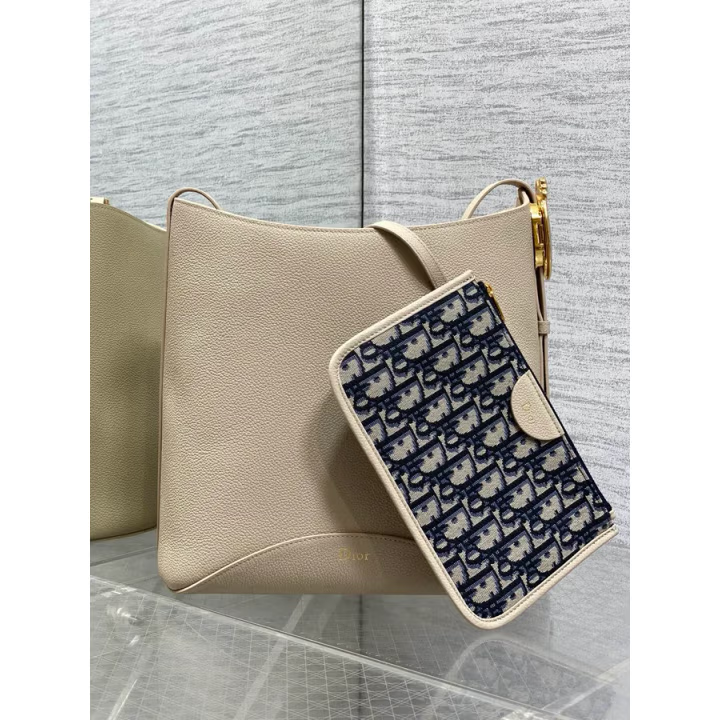
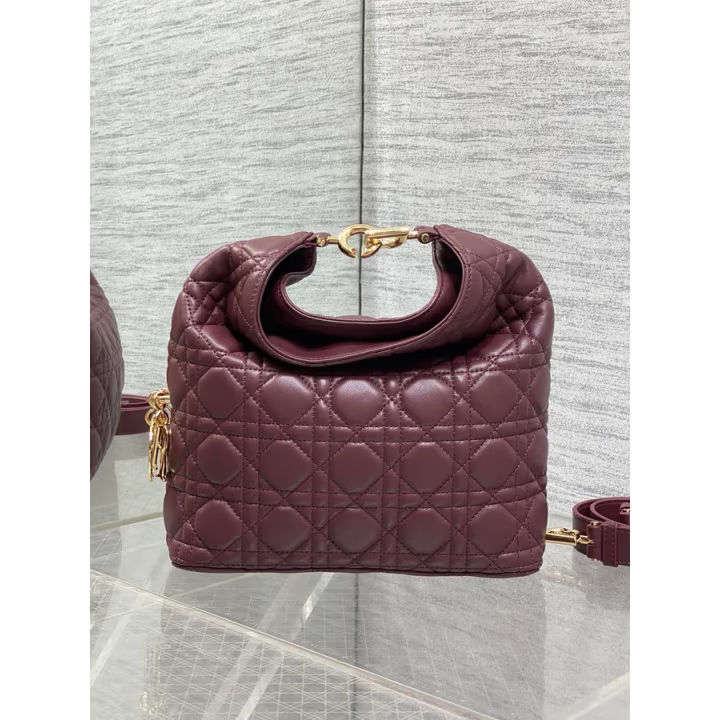
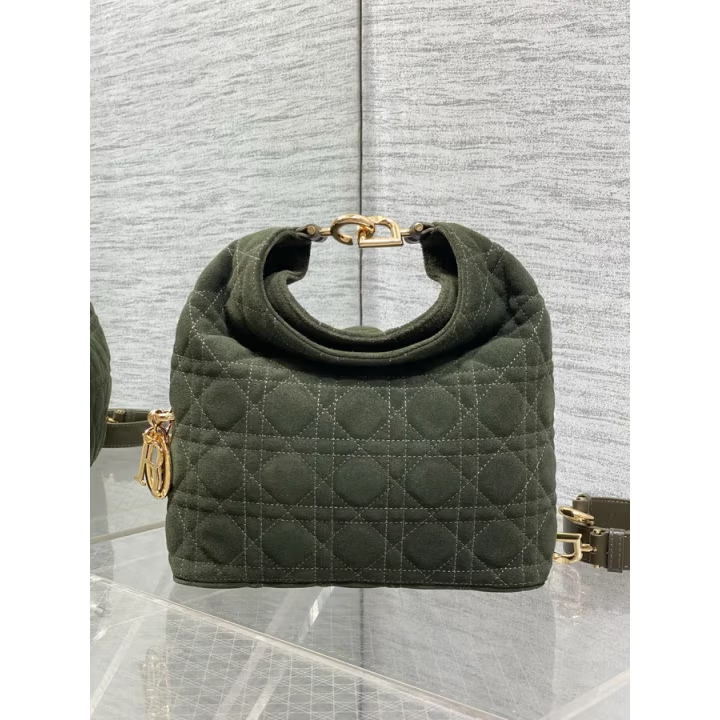
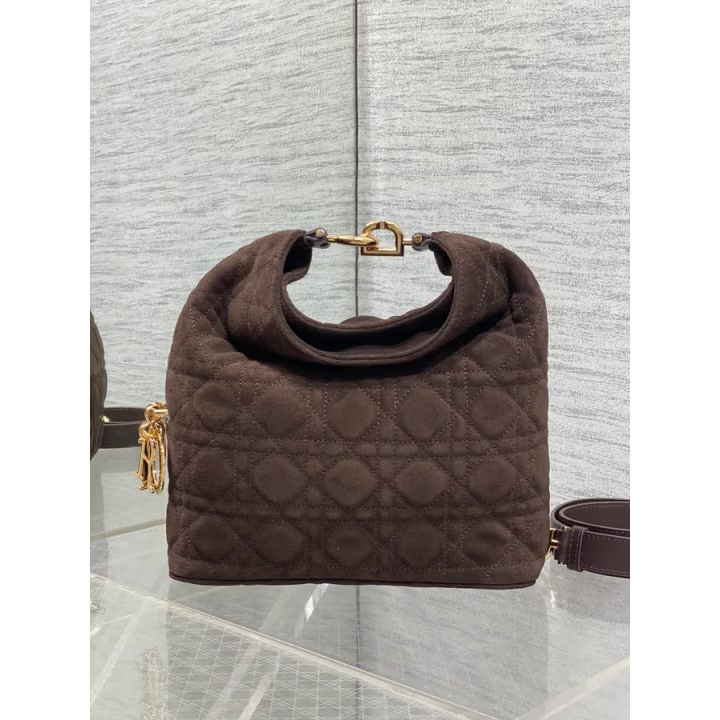
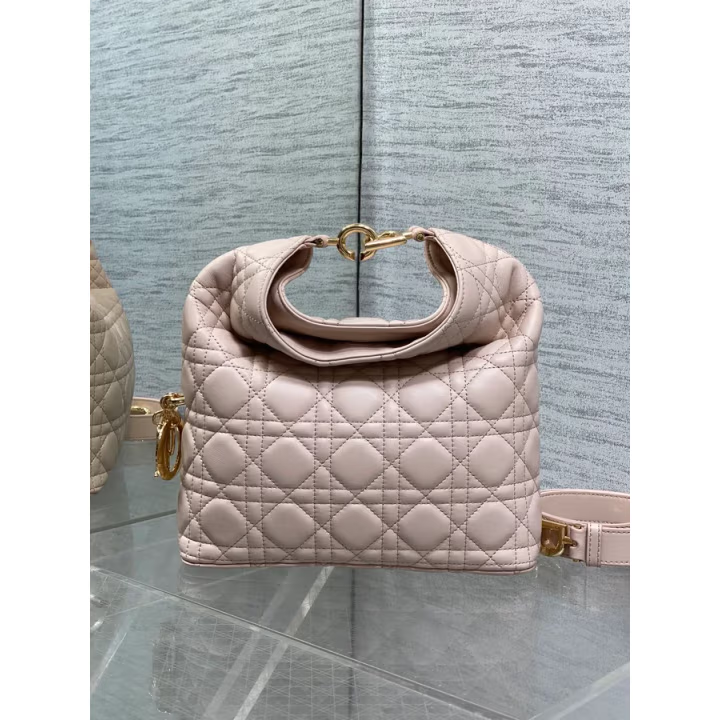
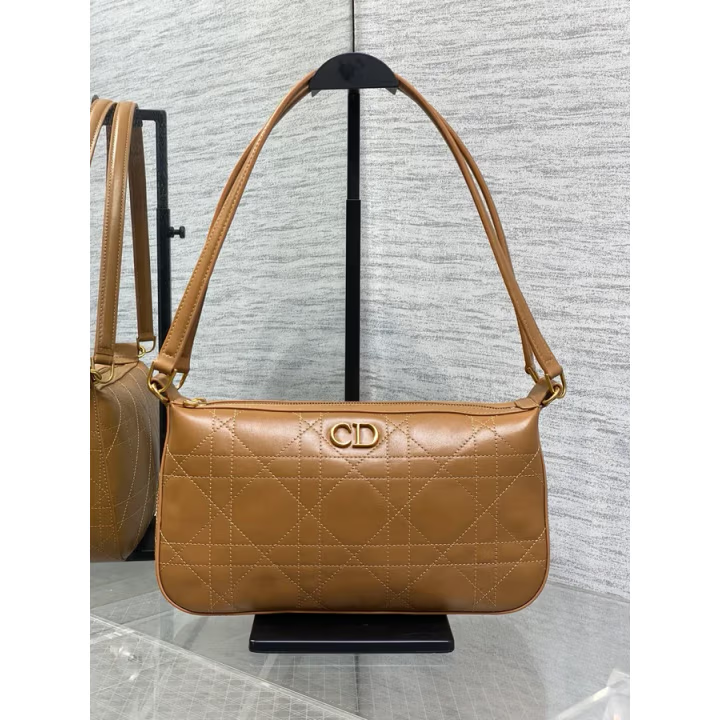

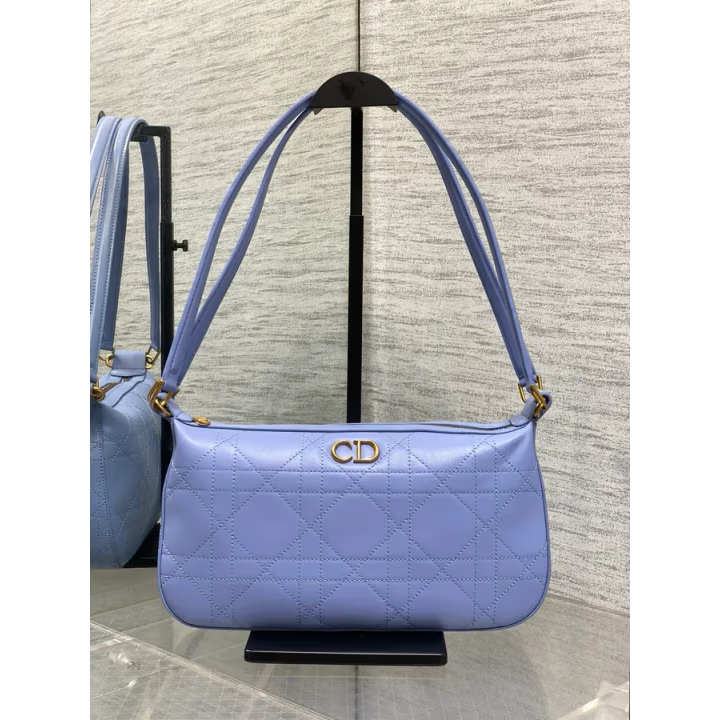
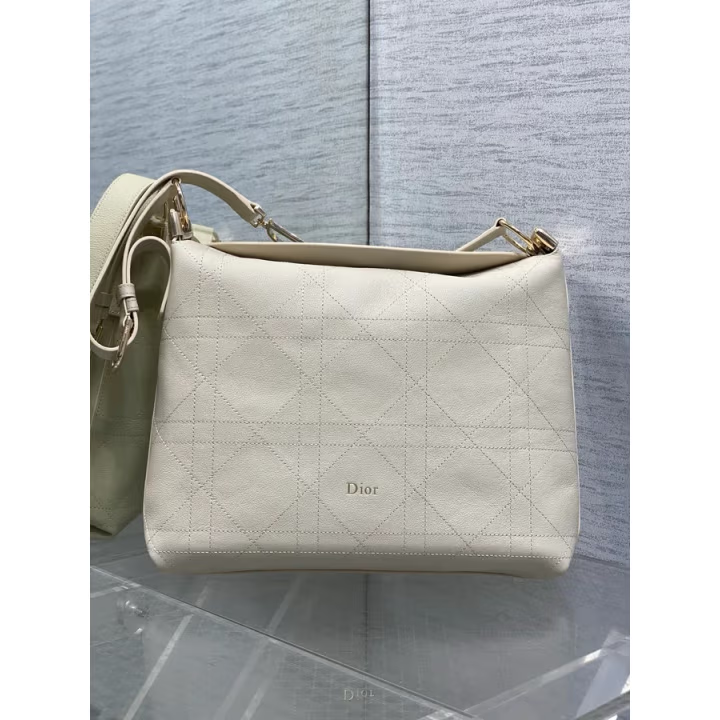
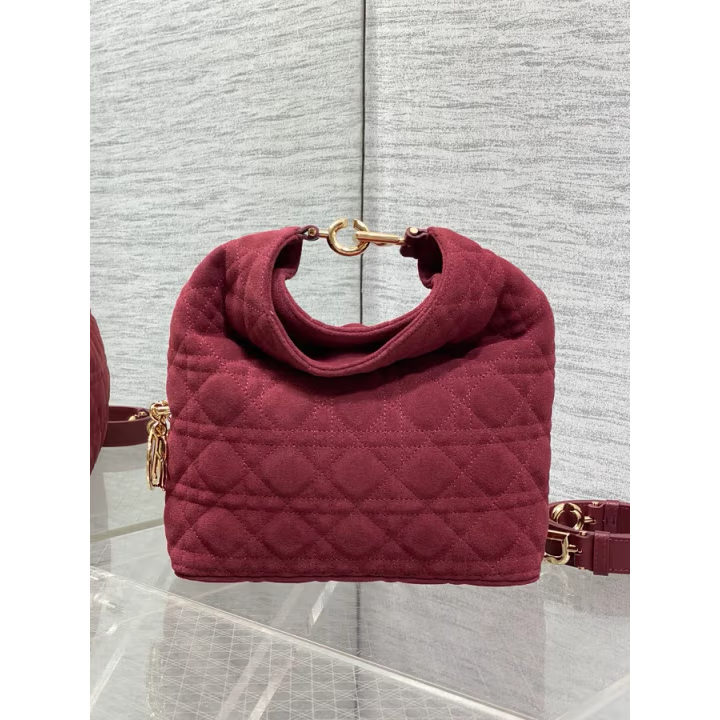
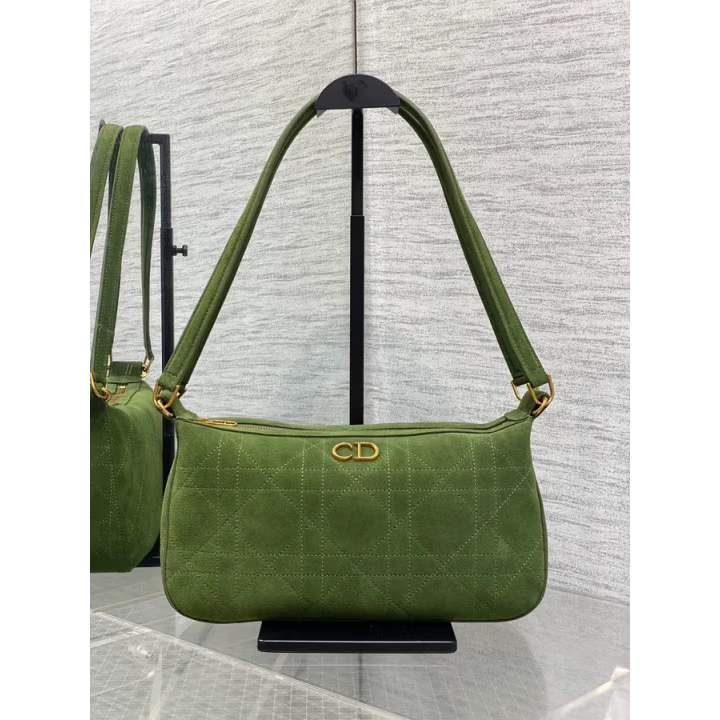
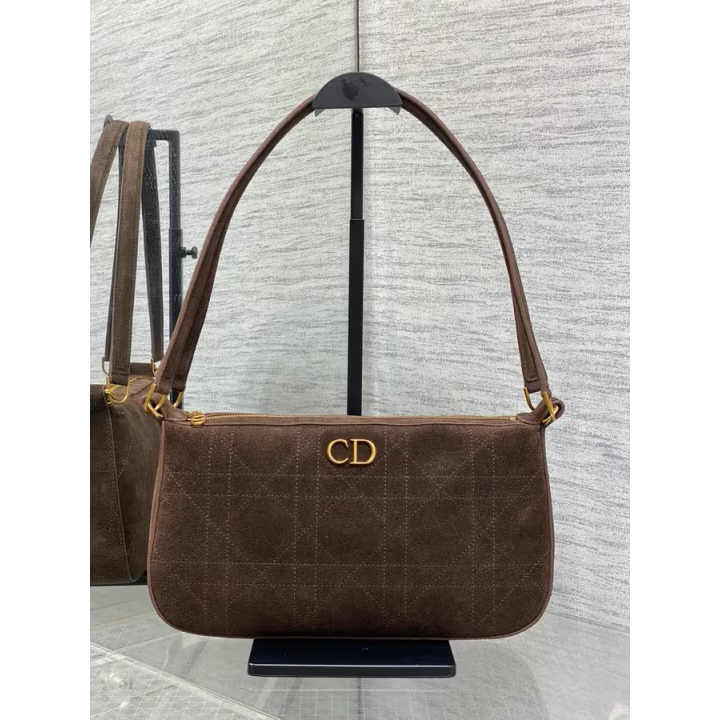
D-Joy's horizontal body makes each tier longer, not deeper
D-Joy Micro is published at 16.5 × 8.5 × 5.5 cm and D-Joy Mini at 19 × 10.5 × 5.5 cm. The body is broad relative to height, and the 5.5 cm depth makes a flat, streamlined shoulder bag. The step between the two tiers is 2.5 cm of width and 2 cm of height with the depth unchanged, which is why the Mini reads as a longer bag rather than a deeper one. Treating each body as a box, the pair runs from about 771 to 1097 cubic centimetres, a 42% increase for 2.5 cm of extra width, though a soft body gives back part of that. The removable chain and adjustable leather shoulder strap let the same bag sit close under the arm or lower across the body. A large phone can lie along the width; it is the shallow depth that rules out a bulky wallet.
Saddle Mini is a curved compartment rather than a flat flap
The Saddle Mini is published at 18.4 × 15.2 × 5 cm, against the Medium's 25.5 × 20 × 6.5 cm. The Mini's height is much greater than D-Joy Mini even though the width is close. The curved lower edge and metal D stirrup handle change the opening and the way the bag contacts the body. It can take a phone and small essentials, but the curved base means a rectangular wallet may not sit flush. A photo of the bag from the side is more useful than a front view because the curve determines the actual usable depth.
Strap types divide the same silhouette into different carries
D-Joy can be carried by a chain, a leather strap or both depending on the reference. Saddle styles vary between the iconic handle and a longer shoulder strap. The strap attachment points matter because a top-handle bag with a clipped shoulder strap sits lower than a built-in flap strap. Ask for the strap material, total length and clear drop. A chain may be more decorative but less comfortable on the shoulder for a long day; a leather strap spreads the load but changes the visual line. Neither belongs in the same answer without the reference.
What changes between compact shoulder sizes, in depth against width
Width is the easiest visual comparison and the least useful capacity measurement, because depth is the axis that barely moves. Across the four published bodies the depth runs 5, 5.5, 5.5 and 6.5 cm, a 1.5 cm spread, while width runs 16.5 to 25.5 cm, a 9 cm spread. Set depth against width and the ratio falls as the bag grows: 33% on the 16.5 cm D-Joy Micro, 29% on the 19 cm D-Joy Mini, 27% on the 18.4 cm Saddle Mini and 25.5% on the 25.5 cm Saddle Medium. The larger bodies gain capacity by getting wider and taller, not thicker. Saddle Mini is the counter-case: at 18.4 cm it is 0.6 cm narrower than D-Joy Mini but 4.7 cm taller, so its box volume is about 27% larger. A full-size wallet is a poor benchmark for any of them. Use a card holder, a compact wallet and the actual phone case.
Cannage, leather and hardware change the read of a shoulder bag
Cannage quilting gives the body a visible grid and can make a small bag feel more structured. Smooth calfskin shows the silhouette more directly, while suede softens the edges. The Dior letter charm and metal handle are visual markers that can move or catch light differently from a flat chain. These materials do not change the published dimensions, but they do affect how the bag sits against clothing and how much friction the strap creates. Ask for a close photograph of the quilting, hardware finish and strap attachment before using a fit report from another material.
The shoulder-bag conclusion
Choose D-Joy Micro for the smallest flat carry, D-Joy Mini for a slightly wider phone-first bag, and Saddle Mini when the curved body and 15.2 cm height suit the look. Confirm the strap arrangement before treating any two as equivalent. Then compare the phone footprint with width and depth, not with the product's size name. The table gives the published figures; the specific listing supplies the colour, hardware and inner tape measurement.